Stump Grinding vs. Stump Removal: Which Do You Need?
People use "stump grinding" and "stump removal" like they mean the same thing. Sometimes they do. But there are two different ways to get rid of a stump, and they leave your yard in very different shape.
Call (629) 263-4804Monday to Saturday, 7:00 AM to 6:00 PM
Last updated: November 12, 2026
What's the difference between stump grinding and stump removal?
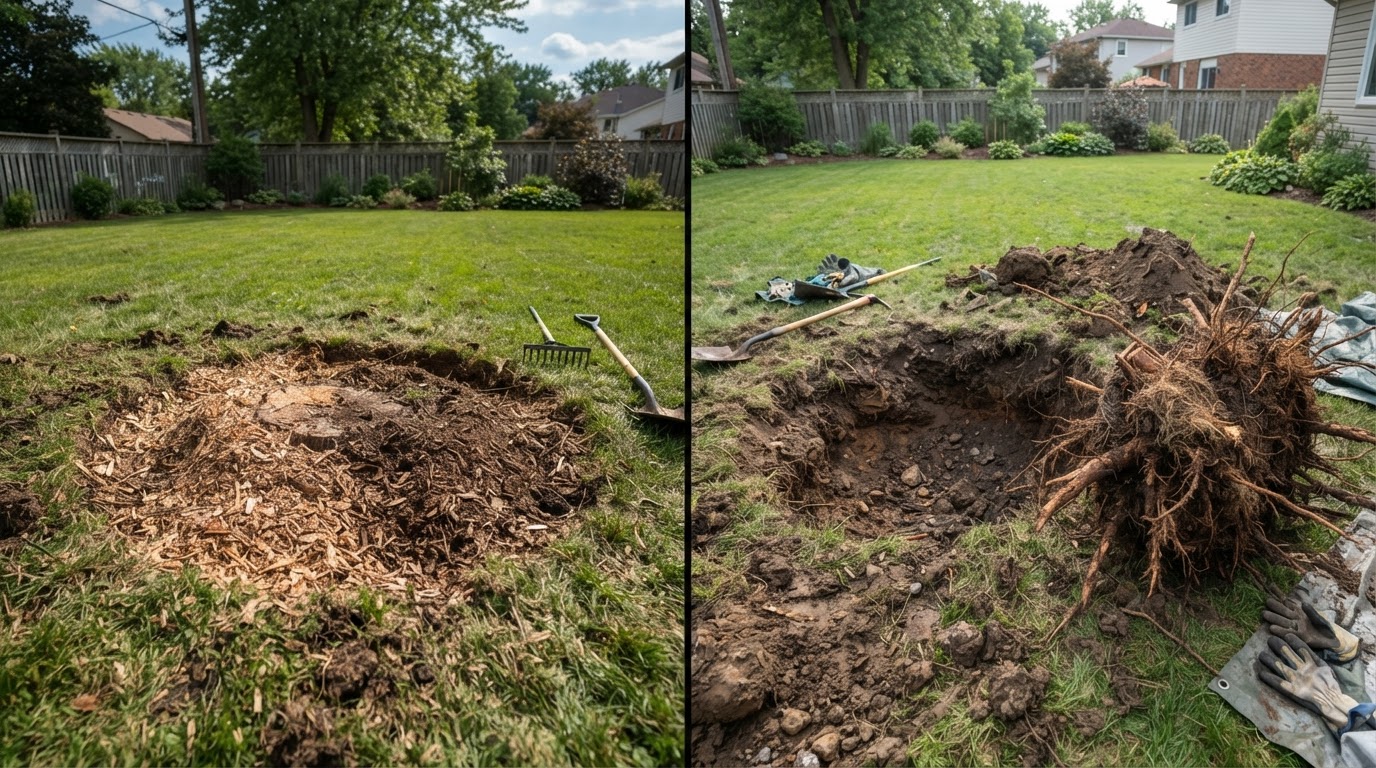
Stump grinding cuts the stump into chips below the surface and leaves the deep roots in the ground to rot. Full stump removal digs the whole stump and its root ball out of the ground.
Most people who say "stump removal" just want the stump gone. Grinding does that. True removal, digging the whole thing out, is a bigger job that most yards don't need.
| Stump grinding | Digging it out | |
|---|---|---|
| How it's done | Grinder wheel cuts the stump into chips | Excavator or heavy digging pulls the stump and roots |
| What's left | Shallow dip full of chips and dirt | Big hole and a root ball to haul away |
| Deep roots | Stay in the ground and rot | Mostly come out |
| Yard damage | Small area | Large area, often with tire ruts |
| Cost | Lower | Higher |
| Time | Often under an hour per stump | Longer, plus filling the hole |
| Best for | Lawns, beds, most yards | Building right on that spot |
When is stump grinding the right choice?
For most yards, grinding is the better call. Pick grinding if:
- You want to mow, seed, or plant over the spot
- You want the least damage to the rest of your lawn
- The stump is near a house, fence, walk, or patio
- The stump is behind a gate where a big machine can't go
- You want the lower price
The roots left behind rot slowly. As they rot, the ground over them can sink a little, so you may need to add some topsoil later. That's about the only downside. Our stump removal service is grinding done deep enough to use the spot again.
When do you need the whole stump dug out?
Digging makes sense when roots in the ground would cause a problem later. That's usually when you're building right on top of the spot:
- A footing, foundation, or slab going exactly where the stump was
- A pool or a deep hole for something else
- Utility trenches running right through the root zone
Even then, deep grinding is often enough. We'll tell you which one your project needs. If it really needs digging, we'll say so up front.
What about the roots after grinding?
Grinding takes out the stump and the big surface roots right off it. The deep roots and the roots farther out stay in the ground. They don't grow back once the tree is dead, though some trees, like Bradford pear, can send up a few sprouts for a while. Those die out once the roots run out of energy.
If surface roots run across the yard, we can grind those out too. See root grinding.
What about chemical stump killers and burning?
Those are the other DIY ways people try. Here's how they stack up:
- Chemical stump removers are meant to speed up rotting, but it still takes weeks to months, and you usually still have to dig out or burn what's left.
- Burning a stump requires a free burn permit from the Tennessee Division of Forestry from October 15 through May 15. Stumps usually smolder for days instead of burning clean.
- Digging by hand is slow, hard work, and much harder on rocky Rutherford County ground.
Which one do most Murfreesboro homeowners pick?
Grinding, by a long way. It's cheaper, it's faster, and it leaves the yard in better shape. Most people want to mow over the spot or plant a bed there, and grinding handles that. You can read more about stump grinding in Murfreesboro on our main page.
Related services
Grinding vs. removal FAQs
For most people, yes. Grinding is how most stumps get removed. Full removal means digging out the stump and root ball, which most yards don't need.
No. Once the tree is dead, the roots won't grow a new tree. A few sprouts can pop up from some species for a while, then they quit.
Usually, yes, if the stump is ground deep enough. Tell us your plans so we grind deep and get the chips out.
A little, over time, as chips and roots break down. Add topsoil as it settles and reseed the spot.
Yes. It takes heavier equipment and more time, and it leaves a bigger hole to fill.
The deep roots rot slowly over years. You won't see it happening, and it doesn't stop you from using the spot.
Not sure which one you need?
Send photos and tell us what you plan to do with the spot. We'll tell you straight.
Call (629) 263-4804Monday to Saturday, 7:00 AM to 6:00 PM